
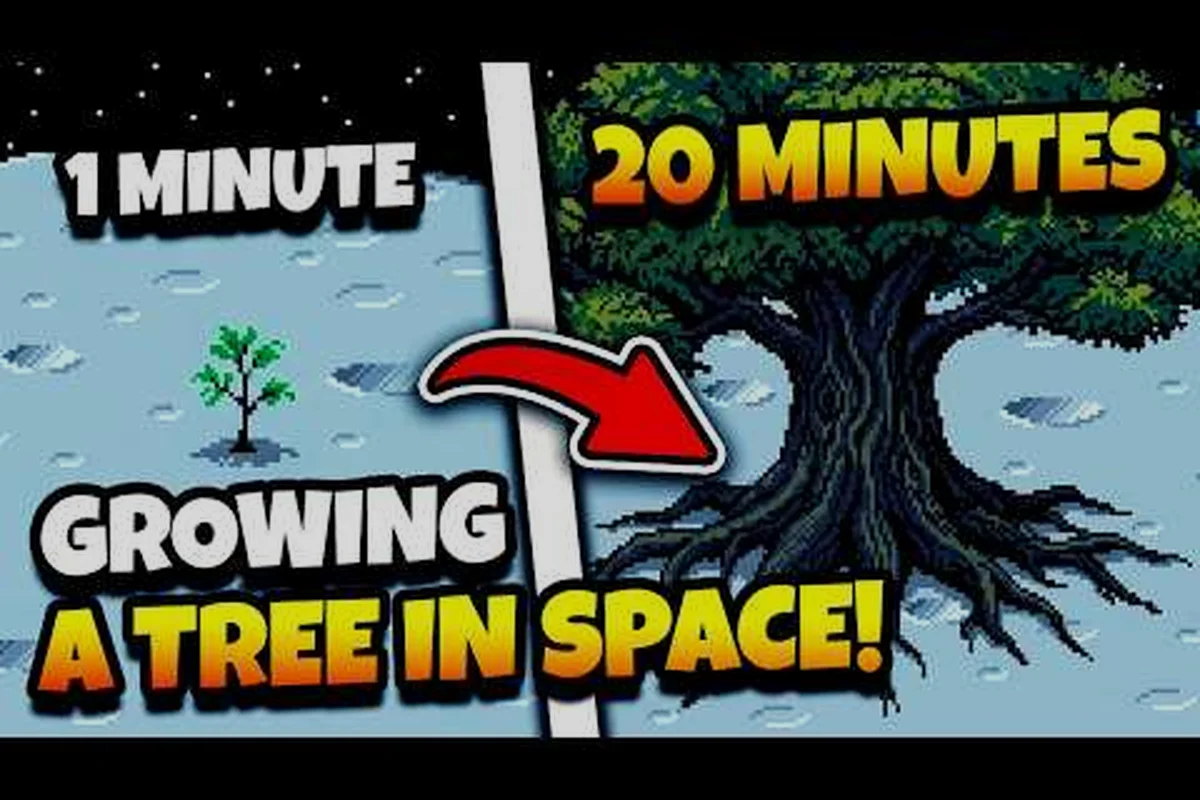
Your tree just hit its growth cap, the screen flashes a quiet prompt, and suddenly the question becomes real: do you mulch it now and start over, or squeeze a few more inches out of a stalled trunk? This is the loop that defines the second half of Moon Garden, and the moment most players realize the game is built around cycles rather than a single climb. The mechanics hub calls it the Moon Garden tree guide, and once you understand how a Moon Garden tree grow again cycle works, every other system in your garden starts to make more sense.
Mulching is Moon Garden's prestige layer. You turn a fully grown tree back into a sapling, the run resets, but the Stardust you banked carries forward and unlocks permanent upgrades that make the next cycle faster, taller, and more rewarding. The official announcement trailer frames it as mulch the grown tree so the next seedling cycle comes back stronger, and that single sentence captures the whole reward loop. If you have ever wondered why your second tree grew twice as fast as your first, mulching is the answer.
How the Mulch Prestige Cycle Actually Works
Before you commit to a reset, it helps to understand what mulching costs, what it pays back, and what the game remembers between runs. The prestige layer is short on surface complexity but long on timing decisions, and the difference between a good mulch and a wasted one usually comes down to a handful of in-game minutes.
The Three Phases of Every Mulch Cycle
Every Moon Garden tree grow again cycle moves through the same three phases, and each one has a different job. If you rush the second phase you lose Stardust; if you camp in the third you stall your progression for no real gain.
| Phase | What You Do | Key Mechanic | What Persists |
|---|---|---|---|
| Climb | Grow the tree to its current cap | Garden output, machinery, tools | Nothing yet |
| Mulch | Reset the tree to a sapling | Stardust payout, permanent upgrade unlocks | Stardust bank, unlocked upgrades |
| Reinvest | Spend Stardust before the next climb | Permanent multipliers and QoL unlocks | All of the above |
The climb phase is the bulk of the run, and it is the part most beginners are already familiar with. The mulch phase is a single action: confirm the reset and watch the Stardust counter tick up. The reinvest phase is where most players underperform on their first few cycles, because they either spend Stardust reactively mid-climb or hoard it waiting for a "perfect" build that never comes.
What Mulching Resets and What It Preserves
The reset is partial by design, and the table below shows exactly which systems survive a mulch. The asymmetry is the whole point: garden tools and output reset so the climb still feels like a climb, while permanent upgrades reset so the climb feels shorter.
| System | Resets on Mulch | Persists Across Mulches |
|---|---|---|
| Tree height | Yes | No |
| Sapling stage | Yes (back to seedling) | No |
| Garden tools | Yes | No |
| Machinery unlocks | Partial (some, not all) | Some |
| Stardust currency | No | Yes |
| Permanent upgrades | No | Yes |
| Achievements | No | Yes |
This split is why the second tree in a run grows noticeably faster than the first, and why a player on their fifth mulch cycle can hit a height that took three full cycles to reach the first time. The progression curve is real, and it is built into the reset itself rather than handed out as a side reward.
Reading the Mulch Reward Ticker
The Moon Garden mulch reward is paid out as Stardust, and the payout scales with how much tree you actually grew. Mulching a half-grown sapling pays almost nothing; mulching a tree that hit its current cap and stalled pays the full cap value. That scaling rule is the single biggest factor in whether a mulch feels worth it.
Stardust Payout by Tree Stage
The numbers below reflect community-tested payout ranges for the standard garden setup as of late 2025, and the ratios hold across patches according to player reports. Treat them as a planning baseline rather than a hard contract, because future updates will tune them.
| Tree Stage at Mulch | Relative Stardust Payout | When to Pull the Trigger |
|---|---|---|
| Mid-growth (below 60% cap) | ~30% of cap value | Almost never worth it |
| Near cap (80-99%) | ~70-90% of cap value | Only if you are abandoning the run |
| At cap (100%, just stalled) | 100% of cap value | Ideal mulch window |
| Past cap (post-cap growth) | 100% of cap value, no extra | Mulch immediately |
The near-cap window is the trap most new players fall into. The tree is still inching upward, the screen still shows a percentage, and the temptation to wait for "one more inch" is strong. Community data is clear on this point: the payout does not increase once the tree has stalled at its current maximum, so waiting past the stall costs you real time without paying you any extra Stardust.
Why Moon Garden stardust mulch Scales With Upgrades, Not Just Height
A taller cap is not the only thing that lifts your payout. Several permanent upgrades feed directly into the Stardust formula, which means two gardens of identical height can pay very different amounts depending on what you bought last cycle. Players who front-load the wrong upgrades see flat payouts; players who target the right nodes see their Stardust income roughly double between the third and fifth cycle.
This is also where the prestige category starts to overlap with the upgrades category, and a focused read of the Moon Garden upgrade guide helps if you want to plan a spend order rather than improvise one. The short version is that height multipliers and pollen multipliers compound into the Stardust formula, so the garden that looks busiest is usually the one paying the most on mulch.
The Mulch Window: Early, Late, and Just Right
Timing is the entire game once you understand the loop. Mulch too early and you bankrupt your Stardust income; mulch too late and you waste climb time on a tree that is not paying you anymore. The window is real, it is narrow, and it shifts as your permanent upgrades grow.
The Stall Signal
The clearest signal that it is time to mulch is visual: the tree height bar stops moving while garden output stays high. Output is still producing pollen, pollen is still feeding the tree, but the height value is frozen. That is the Moon Garden tree grow again prompt in disguise, and the moment most experienced players recommend committing.
| Signal | What It Means | Action |
|---|---|---|
| Height bar stops moving at cap | Tree is stalled, no further payout growth | Mulch now |
| Height bar still climbing | Tree is still converting pollen into height | Keep climbing |
| Output dropping but height rising | Late-cycle slowdown, not a stall | Hold and observe |
| Output maxed and height stalled | Confirmed stall at cap | Mulch immediately |
Community testing suggests that waiting even a few minutes past a confirmed stall costs more cycle time than it saves, because that same pollen could be feeding the next tree's climb. The economic argument for mulching early within the stall window is strong, and most veteran players mulch within a minute of seeing the bar freeze.
Cycle-by-Cycle Timing Goals
Each cycle has a different timing profile, and the table below maps a reasonable target for the first five cycles. These are planning targets, not strict deadlines, because tool unlocks and machinery drops will shift them by a few in-game minutes in either direction.
| Cycle | Target Mulch Window | Stardust Goal | Upgrade Priority |
|---|---|---|---|
| 1 | First stall, even if cap is low | Bank anything, learn the loop | Garden output, pollen rate |
| 2 | First stall at new cap | ~2x cycle 1 payout | Height multiplier, tools |
| 3 | First stall, reinvest first | ~3x cycle 1 payout | Pollen multiplier, machinery |
| 4 | First stall, aim for new cap | ~4x cycle 1 payout | Stardust multiplier nodes |
| 5 | First stall, build for escape | ~5x+ cycle 1 payout | Endgame multipliers |
The pattern is that each cycle is a little shorter than the last, and your Stardust income climbs a little faster. By the fourth or fifth mulch most players hit heights that took three full cycles to reach on their first run, and that compounding is the core reason the prestige loop stays engaging past the first reset.
Building the Next Tree: Upgrade Order and Reinvest Strategy
Spending Stardust well is the skill that separates a smooth prestige climb from a stalled one. The game gives you a long upgrade tree, and most of it is good, but the order in which you buy nodes matters more than the nodes you buy. A bad order can leave you with a garden that is technically upgraded but practically inefficient.
A Reinvest Framework That Survives Patches
The framework below is built around three buckets, and most of the upgrade tree falls cleanly into one of them. Pick one node from each bucket per cycle and you will rarely regret a purchase, even if a future patch rebalances a specific upgrade.
| Bucket | What It Does | Example Nodes | Why It Matters |
|---|---|---|---|
| Output | Multiplies raw pollen production | Pollen rate, garden tools, machinery | Feeds every other system |
| Conversion | Turns pollen into height faster | Height multiplier, growth speed | Shortens the climb phase |
| Economy | Boosts the Stardust payout itself | Stardust multiplier, mulch bonus | Makes every mulch pay more |
A common mistake is to dump early Stardust into economy nodes before the garden is producing enough pollen to feed them. The math is simple: a 10% Stardust multiplier on a small payout is smaller than a 10% height multiplier that lets you reach a bigger cap. Output and conversion usually beat economy on the first two cycles, and economy starts to shine from cycle 3 onward.
Where the Moon Garden tree upgrade Path Fits
The tree upgrade path is the most visible line in the upgrade screen, and it is the one most beginners dump Stardust into first. The path is good, but it is not the only one that matters, and ignoring the pollen and Stardust branches is the fastest way to plateau around cycle 4.
| Upgrade Path | Early-Cycle Value | Mid-Cycle Value | Late-Cycle Value |
|---|---|---|---|
| Height multiplier | High | High | Medium |
| Pollen multiplier | Medium | High | High |
| Stardust multiplier | Low | Medium | High |
| Tool efficiency | High | Medium | Low |
| Machinery unlocks | Medium | High | High |
The mid-cycle column is where the Moon Garden tree upgrade path and the pollen path start to feel equal, and the late-cycle column is where Stardust multipliers quietly become the highest-earning purchases in the tree. By cycle 5 or 6, a well-placed Stardust node can outearn a same-cost height node on a payout-per-minute basis, because it scales with everything you have already built.
The Escape Ending and What Mulching Looks Like at Max
The finale of Moon Garden is reaching a tree height tall enough to escape the moon, and the prestige loop does not stop once you have seen the ending. Players who finish report a heartfelt payoff that lands the grow your way home theme, and the loop after the ending is essentially the same prestige cycle with a longer cap and higher Stardust ceilings.
First Escape vs. Post-Escape Mulching
The first escape is a milestone, not an ending, and the prestige loop after the escape is where most completionist players spend their time. The mechanics are the same, but the stakes are different: you are no longer racing the cap, you are optimizing payouts.
| Phase | Cap Behavior | Mulch Strategy | Payout Ceiling |
|---|---|---|---|
| Pre-escape | Cap increases every cycle | Mulch at first stall, climb the new cap | Moderate |
| First escape | Cap reaches escape height | Trigger ending, then continue cycles | High |
| Post-escape | Cap is fixed at escape height | Mulch at stall, focus on payout efficiency | Highest |
| 100% completion | Cap is fixed, achievements tracked | Mulch at stall, chase remaining unlocks | Highest, achievement-gated |
The post-escape phase is also where the Moon Garden keep stardust question stops being a question. Once you have seen the ending, the entire prestige loop is about banking Stardust efficiently, and the players who finish with the highest Stardust totals are usually the ones who reinvested cleanly rather than hoarding currency between cycles.
Common Late-Cycle Mistakes
By the time most players reach the post-escape grind, they have already made every early-cycle mistake once. The late-cycle mistakes are subtler, and they tend to be about over-optimization rather than under-preparation.
| Mistake | Why It Hurts | Better Approach |
|---|---|---|
| Hoarding Stardust for a "perfect" build | Denies you compounding payouts | Spend each cycle, plan the next |
| Ignoring tool efficiency after mid-game | Slows the climb phase on every cycle | Keep one tool upgrade per cycle |
| Mulching during a temporary slowdown | Wastes a near-cap payout | Wait for confirmed stall, not a dip |
| Skipping machinery unlocks | Leaves pollen on the table | Unlock machinery every 2 cycles |
| Restarting instead of mulching | Loses all Stardust | Always mulch, never abandon |
The "always mulch, never abandon" rule is the single most important late-cycle habit, because a manual restart throws away the Stardust you have already banked. Mulching is cheap, reversible in the next cycle, and pays you every time. A manual restart pays you nothing and resets your upgrade tree.
Frequently Asked Questions
Does the Moon Garden tree grow again after mulching always start from a seedling?
Yes. Every mulch resets the tree to a seedling stage, but the climb to the next cap is faster because your permanent upgrades, tools, and machinery unlocks from previous cycles are still active. The reset looks identical to a fresh save, but the garden underneath is several cycles more developed.
How much Stardust do I get from a Moon Garden mulch reward at full cap?
A tree that hits its current cap and stalls pays out 100% of the cap value in Stardust. The exact number depends on your height multiplier, pollen multiplier, and any Stardust multiplier nodes you have unlocked, so two players of identical height can see different payouts. A well-developed cycle 5 garden typically pays 4-5x what a cycle 1 mulch paid.
When is the best time to mulch in Moon Garden?
Mulch as soon as the height bar stops moving at the current cap. Waiting past a confirmed stall does not increase the payout, and the pollen you spend on a stalled tree could be feeding the next climb instead. The single best signal is a frozen height bar with steady pollen output, and the best habit is to mulch within a minute of seeing it.
What should I spend my Moon Garden stardust mulch currency on first?
Output and conversion upgrades beat economy upgrades on the first two cycles, so pollen rate and height multiplier nodes are the safest first purchases. From cycle 3 onward, start mixing in Stardust multiplier nodes, because they scale with everything you have already built. The exact order shifts with patches, but the output-first, economy-last pattern holds across player reports.
Can I keep stardust after the escape ending in Moon Garden?
Yes. The escape ending does not consume your Stardust, and the prestige loop continues with the same mulching rules after the credits roll. Post-escape cycles use a fixed cap at escape height, so the goal shifts from climbing higher to maximizing payout efficiency on every mulch.