
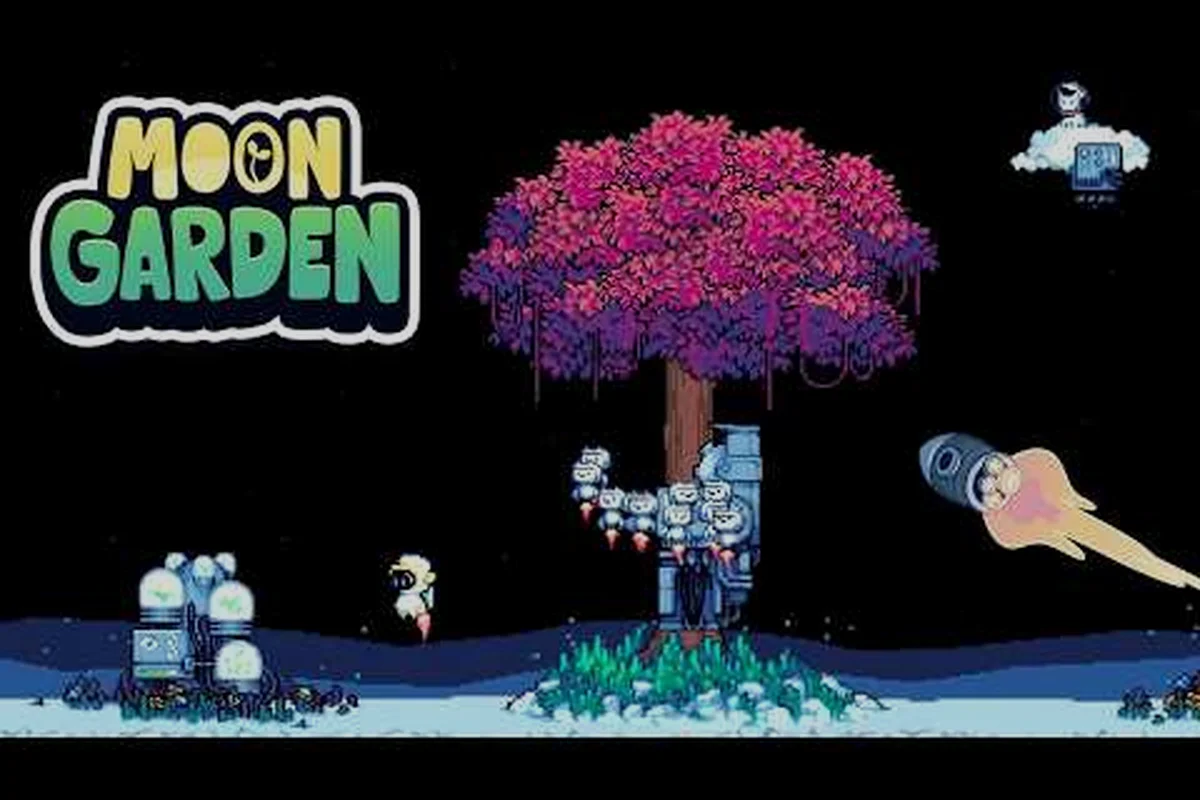
Moon Garden game length surprises a lot of cozy-incremental fans because the credits can roll in well under a single evening. If you are wondering how long to beat Moon Garden, the short answer is roughly 1.5 to 3 hours for the main escape ending, with optional playtime for the 16 achievements and any extra sandbox tinkering. Released on September 11, 2026 by developer Kairos Games LLC, the title packs a complete incremental arc — plant, optimize, automate, escape — into a deliberately compact experience, and that compactness is exactly what most players are trying to budget before they hit purchase. Details appear on the Steam reviews.
Understanding Moon Garden Game Length Across Playstyles
Moon Garden is built around a self-contained loop: you plant flowers in Garden Pods, spend pollen on seeds from the pachinko vending machine, push the central tree higher with Stardust, and eventually grow it tall enough to escape the moon. Because every run is anchored to a single, clearly visible goal — the tree reaching escape height — the Moon Garden game length is unusually predictable compared to open-ended incremental games that drag on for dozens of hours. According to the official store page, the core loop is intentionally short and rewarding, so the credits arrive once your tree is tall enough rather than after a fixed time gate.
| Playstyle | Approx. Playtime | What You Do |
|---|---|---|
| Story run (main escape ending) | 1.5 – 3 hours | Plant, optimize, mulching cycle, escape the moon |
| Cozy completionist (16 achievements) | 4 – 6 hours | Add rare seeds, robots, satellites, full Stardust tree |
| Sandbox / endless tinkering | 6+ hours | Prestige loops, alt routes, no fixed endpoint |
The "story" run is the headline number most people mean when they ask how long to beat Moon Garden. If you stick to efficient upgrades, skip the experimentation, and just push the tree to escape height, you can realistically finish in around 90 minutes, which is fast even for the cozy-incremental genre. The 3-hour upper bound assumes you read the helper text for every new building, try a few different seed tiers, and let your first run breathe a little.
For players who like to see every achievement icon turn gold, the Moon Garden 100 percent guide experience is a different commitment. The game ships with 16 achievements on Steam, and chasing all of them generally means doing at least one secondary run focused on rare seeds and automation, which roughly doubles your playtime over a straight-to-credits attempt. Community estimates from launch week put a full completionist run in the 4 to 6 hour range, which is still very manageable for a working-adult weekday.
What Actually Drives the Playtime
The single biggest factor in Moon Garden how long to beat is how aggressively you spend Stardust. Stardust is the premium currency you earn by mulching the tree — chopping it down so it regrows stronger — and the choices you make on the permanent upgrade tree have an outsized impact on pacing. Players who front-load automation upgrades (little robots and satellites) tend to finish in the lower end of the range because passive pollen production picks up the slack. Players who prioritize cosmetic or niche upgrades may see their runs stretch toward the 3-hour mark without any real benefit.
| Spending Priority | Effect on Run Length | Risk |
|---|---|---|
| Automation upgrades first | Shortens the run to ~1.5 hrs | Boring if you like hands-on play |
| Seed-tier upgrades first | Shortens run via higher pollen yield | Requires good pachinko luck |
| Cosmetic / niche upgrades | Slightly lengthens run | Low mechanical payoff |
| Balanced spread | Lands near 2 hrs | Most "natural" feeling |
The second factor is your familiarity with incremental loops. New players who have never seen a pachinko vending machine mechanic or a mulching-style prestige system will pause more often to read helper text, and that pause time is real — the UI introduces several mechanics at once, which is one of the most common complaints in launch reviews. Veteran incremental players can skip most of the tutorial beats and finish a full run in roughly 90 minutes on a first attempt.
A third, smaller factor is the language and platform setup. Moon Garden supports nine languages, including English, French, German, Spanish, Japanese, Polish, Portuguese-Brazil, Russian, and Simplified Chinese, but it is Windows-only. There is no native Linux or macOS client as of launch, so anyone running through Proton or a virtual machine should expect a small overhead that does not actually count toward the in-game timer but does count toward your evening.
Main Escape Ending: The Core Moon Garden Walkthrough
The main escape ending is the canonical "how long to beat Moon Garden" benchmark, and it follows a clean four-phase structure that doubles as a Moon Garden tutorial walkthrough. Each phase has a clear visual cue — a taller tree, a new building, a different pachinko layout — which makes the pacing feel intentional rather than padded. Below is the phase-by-phase breakdown most players report on the official Moon Garden on Steam page and in community threads.
| Phase | Visual Goal | Approx. Time | Main Action |
|---|---|---|---|
| 1 – Plant | First Garden Pods producing pollen | 0 – 25 min | Buy basic seeds, plant, learn pachinko |
| 2 – Optimize | Pachinko + first Stardust upgrades | 25 – 60 min | Spend Stardust on permanent upgrades |
| 3 – Automate | Robots and satellites running | 60 – 110 min | Unlock automation, push seed tiers |
| 4 – Escape | Tree reaches escape height | 110 – 180 min | Mulch, push final upgrades, credits roll |
Phase 1 is purely about getting your first passive income online. You unlock Garden Pods, plant basic seeds, and start watching pollen tick up. The pachinko vending machine is where you spend pollen to buy new seed tiers, and the first ten or fifteen minutes are basically a tutorial — you learn what each seed does, you fail a few pachinko shots, and you start to feel out the upgrade cadence. Players who want a faster clear should plant only the cheapest seeds at first and resist the urge to spend pollen on anything that does not immediately increase output.
Phase 2 is where Stardust enters the picture for most players. Once the tree is tall enough, you can mulch it — chop it down to a stump — which resets the visual but grants Stardust based on your progress. This is the game's prestige beat, and the way you spend Stardust determines the rest of your run. The community-recommended opening spread is to put roughly 40 percent into automation, 30 percent into seed-tier unlocks, and 30 percent into pollen yield, with cosmetics and niche upgrades held until you have a comfortable buffer. You can find a deeper breakdown in the Moon Garden upgrade guide, which maps out specific spending orders for both first-time and repeat players.
Phase 3 is the automation payoff. Little robots and satellites unlock at certain Stardust thresholds, and once they are running, the game shifts from active clicking to checking in every few minutes. This is the section where the run length really compresses for efficient players, because automation lets you bank pollen while you are away from the keyboard. A common beginner mistake is to leave automation too late — by the time you unlock your first robot, the tree should already be at roughly 40 percent of escape height, so you want to beeline for that unlock rather than spreading Stardust evenly.
Phase 4 is the credits roll. Once the tree reaches the final height threshold, the game triggers a short escape cutscene and writes your run time to a Steam stat. The cutscene is brief and the credits are short, so the entire ending sequence adds maybe 3 to 5 minutes to your total. From a pure Moon Garden how long to beat perspective, this is where your 90-minute speedrun or your 3-hour leisurely run both end.
Moon Garden 100 Percent Guide: Achievements and Completionist Runs
The Steam version of Moon Garden ships with 16 achievements, and a true 100 percent run means unlocking every one of them. The achievement list covers both mechanical milestones — reach certain pollen thresholds, mulching the tree X times — and exploration goals, like finding every seed tier or fully upgrading the satellite network. You can see the full list on the Moon Garden achievements page, which doubles as a checklist once you start your run.
| Achievement Category | Count | Difficulty | Avg. Extra Time |
|---|---|---|---|
| Story milestones | ~5 | Easy | None (rolled into main run) |
| Automation milestones | ~4 | Easy-Medium | +30 min |
| Seed / pachinko mastery | ~4 | Medium | +60 min |
| Hidden / exploration | ~3 | Medium-Hard | +60 – 90 min |
The story-milestone achievements unlock automatically as you play through the main escape ending, so they add zero time to a first run. The automation and seed-mastery achievements take a little extra focus — you will need to actively build out your robot and satellite network rather than just passively watching pollen tick up, and you will need to deliberately pursue rare seeds from the pachinko machine. These typically add about 30 to 60 minutes to a run on top of the base 1.5 to 3 hours.
The hidden and exploration achievements are where the Moon Garden 100 percent guide mindset really kicks in. According to community reports, some achievements are tied to specific mulching thresholds (chopping the tree at exactly the right height for a bonus reward) and others to building configurations that are not obvious from the helper text. Players chasing these usually plan a dedicated second run where they replay Phase 2 and Phase 3 with a specific achievement loadout in mind, which is faster than trying to brute-force every hidden condition in a single playthrough.
A practical Moon Garden 100 percent guide strategy is to do a "clean" first run for the story and the easy milestones, then a second run focused on automation and rare seeds, and optionally a third run for the hidden achievements you missed. Two runs typically take 3.5 to 5 hours, and three runs take 5 to 7 hours, which lines up with the community estimate of 4 to 6 hours for a single dedicated completionist run that knows what to do on the second loop.
| Strategy | Runs Needed | Total Time | Completion % |
|---|---|---|---|
| Story only | 1 | 1.5 – 3 hrs | ~35% |
| Story + achievements | 1 – 2 | 3 – 4.5 hrs | ~80% |
| Full 100% | 2 – 3 | 4 – 7 hrs | 100% |
| Sandbox / endless | ∞ | 6+ hrs | N/A |
For new players who want a smoother first session, the Moon Garden beginner guide covers the early-game setup in more detail, including which helper text to read and which upgrades to ignore on your first mulching. Pairing that with a focused achievement plan from the Steam list is the fastest path to a 100 percent save file without burning a whole weekend.
What Is Stardust and How It Shapes Your Moon Garden Run
Stardust is the premium currency in Moon Garden, and understanding it is the single biggest lever for controlling Moon Garden game length. You earn Stardust by mulching the tree — chopping it down once it reaches certain height thresholds — and you spend Stardust on permanent upgrades that persist across runs. The mechanic is the game's prestige layer, and it sits on top of the pollen loop the same way that a "reset for currency" button sits on top of any classic incremental.
| Stardust Source | When It Triggers | Typical Yield |
|---|---|---|
| First mulching | Tree at ~25% height | Small (tutorial-sized) |
| Mid-run mulching | Tree at ~50% height | Moderate |
| Late mulching | Tree at ~75% height | Large |
| Escape mulching | Tree at escape height | Largest single payout |
The key insight for Moon Garden how long to beat is that the more Stardust you bank per mulching, the faster your next run goes. Players who mulch early and often — even at sub-optimal tree heights — actually shorten their overall time to the credits because the early permanent upgrades compound. Players who wait for the "perfect" mulching height often find themselves stuck in a 3-hour run because they never got the automation unlocks they needed. A good rule of thumb is to mulch at every 25 percent height milestone rather than trying to maximize a single payout.
What Stardust actually buys falls into a few broad categories: pollen yield multipliers, seed-tier unlocks, automation buildings (robots and satellites), and cosmetic flourishes. The first three categories are the ones that meaningfully shorten your run, and the cosmetics are pure personal taste. The community-recommended spread is roughly 50 percent into yield and seed tiers, 40 percent into automation, and 10 percent into cosmetics once you have a comfortable buffer.
The mulching decision is also where Moon Garden what is stardust answers a related question: is Stardust worth losing your progress? Yes, emphatically, because every permanent upgrade you buy is a multiplier on every future run. Players who refuse to mulch because they want to keep their current tree often end up stuck in a slow grind where the next upgrade costs more pollen than they can produce. A first mulching at 25 percent height feels bad in the moment but pays for itself within 15 to 20 minutes of the next run. For a deeper breakdown of how Stardust interacts with each upgrade category, the Moon Garden idle guide walks through the long-term math.
Speedrun, Casual, and Cozy Pacing Compared
Because Moon Garden is a single-player incremental with no combat, the pacing is entirely your choice, and the Moon Garden game length shifts dramatically based on how you approach it. Below is a side-by-side comparison of the three most common pacing modes, with rough time budgets drawn from launch-week community data and the official store description.
| Pacing Mode | Session Length | Run Length | Best For |
|---|---|---|---|
| Speedrun | One 90-min session | ~1.5 hrs | Achievement hunters, busy evenings |
| Casual | 2 – 3 sessions of 45 min | ~2.5 hrs | Most first-time players |
| Cozy | 4+ sessions of 30 min | 3+ hrs | Players who like the loop for its own sake |
| AFK idle | One long background session | 2 – 4 hrs | Players who like automation-heavy runs |
The speedrun pacing is genuinely viable because the game's structure has a clear endpoint and the automation unlocks let you bank pollen while you make tea. Casual pacing is what most players default to — a session or two of focused play, a final relaxed push to the escape cutscene. Cozy pacing is for players who like the loop itself and are not really chasing the credits; they will often reset manually and start a new garden just because they want to, which is a perfectly valid way to enjoy a cozy incremental.
AFK idle is the wildcard. Because robots and satellites keep producing pollen while the game is open in the background, you can technically let the run play itself for an hour and then come back to a near-finished tree. The community notes that this is a legitimate strategy for the second or third run once you have the permanent upgrades to make idle production meaningful, but it is not a great approach for a first run because you skip the helper text that teaches you how the systems work.
Tips to Shorten or Extend Your Moon Garden Game Length
Whether you want to beat the game in a single evening or stretch it across a long weekend, a few targeted choices make a real difference. The tips below are drawn from the launch-day community thread and from the helper text inside the game itself, and they are framed around the question of how long to beat Moon Garden for a player who has already decided on their target pacing.
| Goal | Recommendation | Effect |
|---|---|---|
| Shorten run | Mulch at every 25% milestone | Faster Stardust bank |
| Shorten run | Front-load automation upgrades | Idle pollen production |
| Shorten run | Skip cosmetics entirely | Pure mechanical efficiency |
| Extend run | Hold mulching for max payout | Longer per-run grind |
| Extend run | Experiment with every seed tier | Discovery-driven pacing |
| Extend run | Tinker with satellite layouts | Endless sandbox fun |
For a shorter run, the three highest-impact moves are aggressive mulching, early automation, and ignoring cosmetics until after the credits. Each of these on its own shaves roughly 15 to 25 minutes off a typical run, and stacking all three can bring a leisurely 3-hour run down to closer to 1.5 hours. The trade-off is that you miss out on the slower, more meditative side of the game, so this is a recommendation for players who specifically want to see the credits fast.
For a longer run, the inverse applies: hold mulching until the tree is at a high threshold, spend Stardust on cosmetic and niche upgrades, and deliberately try every seed tier from the pachinko machine. The pachinko machine is the single biggest discovery driver in the game because each new seed tier has a slightly different yield curve, and chasing the rare seeds naturally extends a run by an hour or more without feeling like a grind.
A middle-ground approach is to do one efficient run for the credits, then a second run where you let yourself experiment. This is a popular pattern in the community because it gives you the satisfaction of the escape ending without the pressure of a first run, and it sets up the achievements nicely. Players who want a specific Moon Garden tutorial walkthrough for this two-run pattern can find step-by-step notes in the Moon Garden what to do first guide, which is structured around exactly that kind of paced playthrough.
Frequently Asked Questions
How long does it take to beat Moon Garden for the first time?
Most first-time players finish the main escape ending in roughly 1.5 to 3 hours, depending on how much they experiment with seeds and how early they start mulching for Stardust. Players who read every helper text and try multiple pachinko strategies tend to land near the 3-hour mark, while focused players who mulch at every 25 percent height milestone can finish in around 90 minutes.
Is Moon Garden 100 percent realistic in one playthrough?
It is technically possible but not recommended. The 16 Steam achievements include a few hidden and exploration milestones that are easier to hit on a dedicated second run with a specific plan. A realistic single-sitting 100 percent run is more like 5 to 7 hours across two or three focused sessions, with the first session handling the main escape and the second session chasing the rare seeds and hidden triggers.
What is Stardust in Moon Garden, and does it affect game length?
Stardust is the permanent-upgrade currency you earn by mulching the central tree once it reaches certain height thresholds. It directly affects Moon Garden game length because the more Stardust you bank, the faster your next run goes — automation upgrades and seed-tier unlocks both compound across runs, so a player who mulches aggressively can cut their overall time to 100 percent nearly in half compared to a player who waits for a single maximum payout.
Can I play Moon Garden idle to shorten the run?
Yes, but mostly on your second or third run. Once you have unlocked a few permanent automation upgrades, robots and satellites will keep producing pollen while the game is open in the background, which lets you bank huge amounts of pollen in a single long idle session. For a first run, it is better to play actively so you can read the helper text and learn the systems, then switch to idle-heavy play for the completionist push.